Retired Village Midwife Leaks a Simple Ancient Ritual That Helps New Mothers Shed the Post-Baby Belly — Without Setting Foot in a Gym (Even If You've Had Two C-Sections and Given Up Hope)
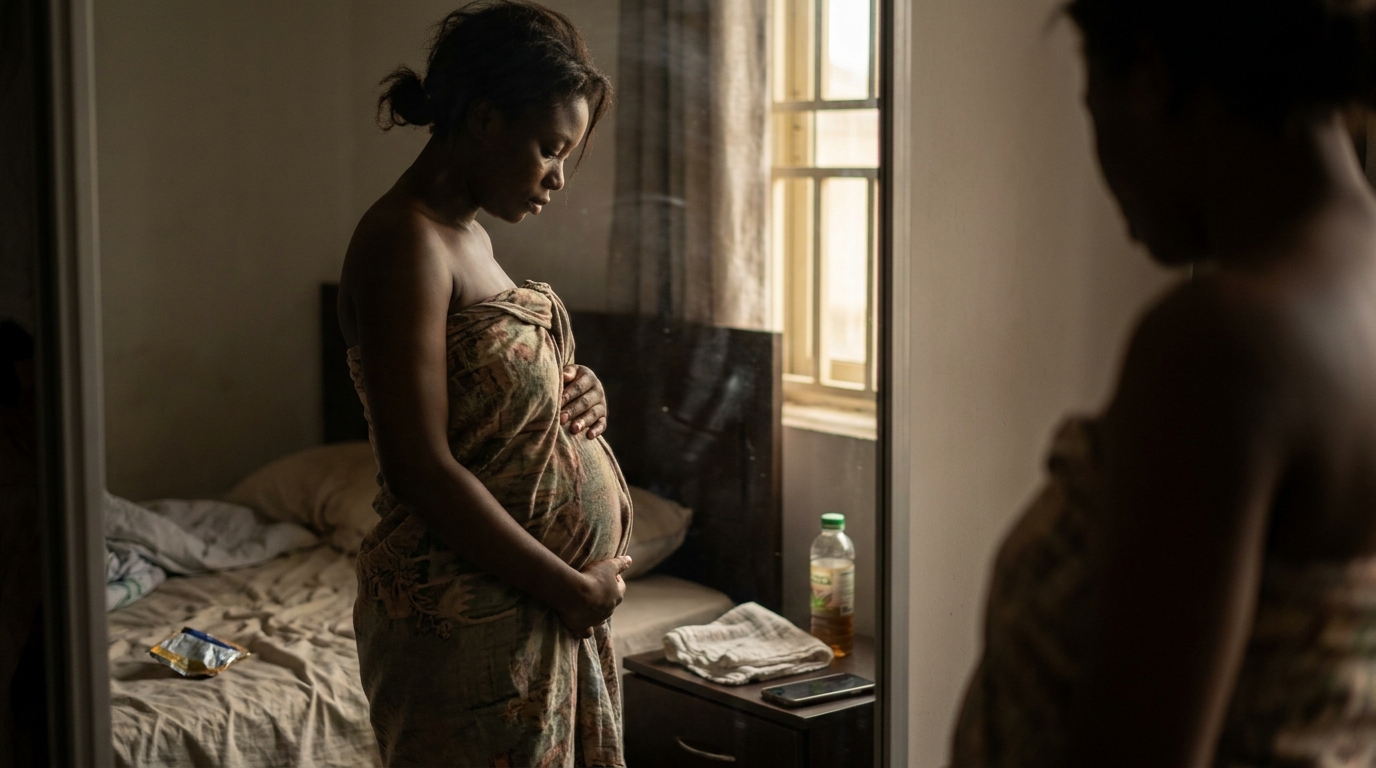
You've tried the waist trainer.
You've tried the teas.
You've done the situps that everyone said would work.
And every morning you stand in front of that mirror and the belly is still there — like it never got the memo that the baby already left.
What nobody told you is that none of those things can fix what childbirth actually did to your body.
After the baby, nobody prepares you for what happens next.
They celebrate the baby. They ask about the baby. They bring food, and aso-ebi, and prayers for the baby.
But your body?
Your body is still there. Quietly changed. Quietly different. Quietly waiting for you to notice.
The belly that won't leave, even though the baby already left.
The clothes from before the baby, sitting at the back of the wardrobe.
But the thing that cuts the deepest?
It is about how invisible you have become.
At first, you tell yourself it will pass.
Give it time. Your body just needs to adjust.
One month. Nothing moves.
Two months. Still the same.
Four months, and you stop checking.
But the world does not stop noticing.
Your sister-in-law who delivered three weeks after you showed up at the naming ceremony looking like she had simply taken a long nap. Slim. Glowing. Everyone commented. Nobody said anything to you.
Your colleague returned from maternity leave two months ago. On her first day back, three people told her she looked amazing. You smiled and said nothing.
And then there is the thing at home. The one you have not said out loud to anyone.
The way he used to look at you has changed.
You tell yourself you are imagining it.
But late at night, when the baby is finally asleep and it is just you and the ceiling and the quiet, the questions come anyway:
"Does he still see me the way he used to?"
"Is this just new-baby stress, or has something between us quietly shifted?"
"Will I ever feel like myself again — or is this just what I am now?"
"And if I don't fix this — how long before the distance between us becomes a gap I can no longer close?"
If you do not want to spend another year watching your body, your confidence, and the closeness in your home slowly disappear — while you keep spending money on things that were never going to fix the real problem —
then every single word on this page was written for you.
Because I sat in that same dark. For eight months. Asking the same questions.
And I found the answer.
Not in a waist trainer. Not in a slimming tea. Not in a scary IG vendor's "flat tummy mixture" in a small plastic container with no label and no ingredients list.
In a simple ancient ritual. Passed down quietly from midwife to mother for generations. And almost completely lost.
My name is Adaeze.
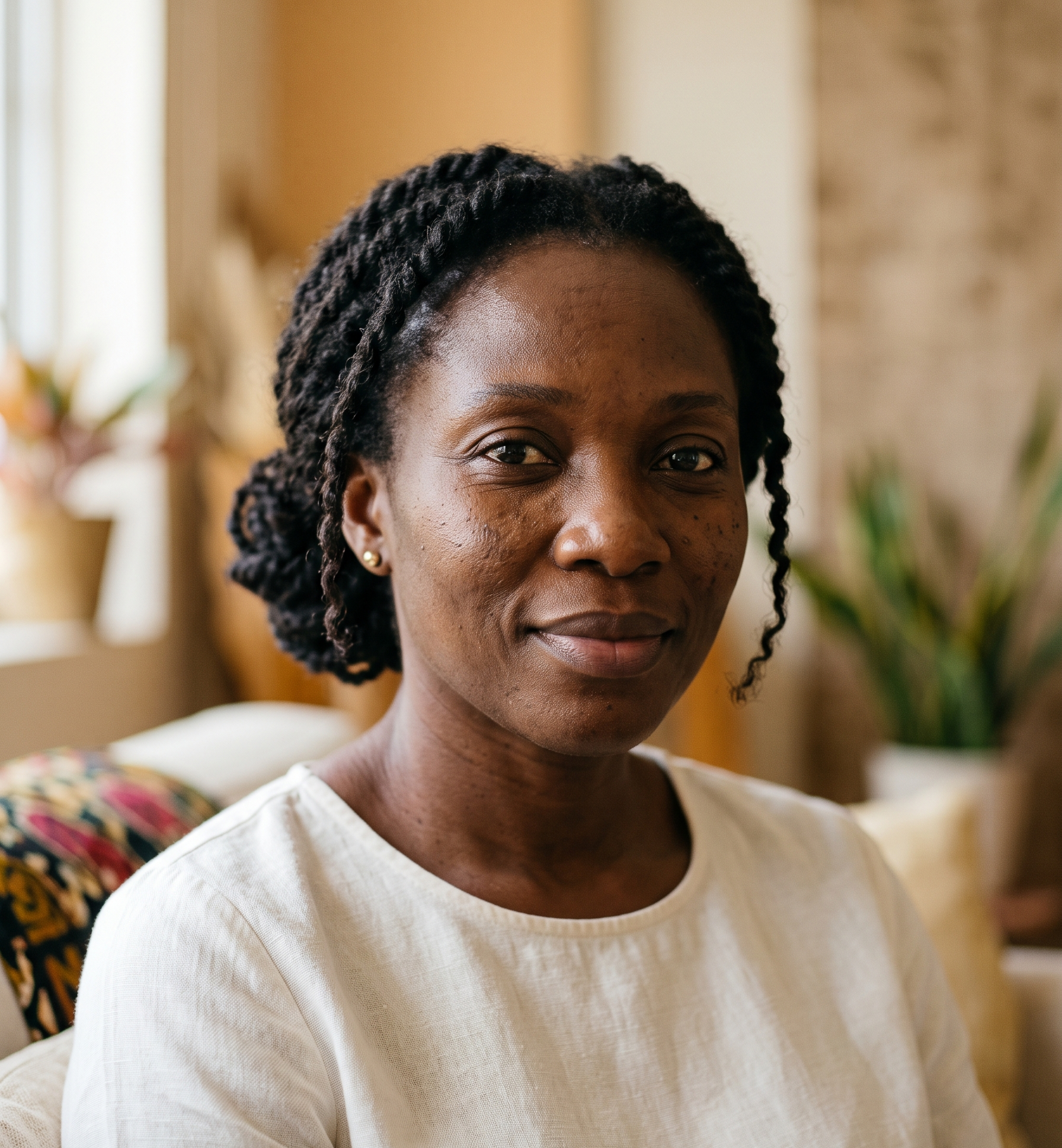
I'm a 38-year-old mother of three from Lagos.
I am NOT a doctor. I am NOT a nurse.
I'm a certified fitness coach who spent eight months trying everything the internet told her to try — and found the one thing it never mentioned.
The Morning I Couldn't Zip My Skirt
Eight months after my third baby.
Eight months. Not eight weeks. Eight months.
I stood in my bedroom, church skirt in one hand, trying to zip it with the other, and it wouldn't close.
Not even close.
I sat down on the edge of the bed and held the skirt in my lap.
I had a degree in fitness. I had spent years helping other women with their bodies.
"It's been eight months. Why is this belly still here?"
After my first baby, the weight came off eventually. After my second, it took longer, but it came.
After my third, something was different.
The belly sat there like it had paid rent.
What I Tried (And What It Cost Me)
I am a fitness coach. But desperation has a way of bypassing everything you know.
First, I bought a waist trainer. An expensive one, from one of those Instagram pages. ₦12,000. I wore it every day for three weeks. My waist hurt. My ribs hurt. The moment I took it off, everything went back. ₦12,000 wasted.
Then someone told me about a "flat tummy tea." Detox, they said. I drank it for two weeks. It gave me diarrhea so bad I was scared to leave the house. Nothing changed in my belly except the discomfort. ₦7,500 wasted.
I tried an IG vendor's postpartum slimming bundle. Small plastic container, no label, no ingredients list, just a WhatsApp number and a promise. Three weeks. Nothing. Then a week of itching and discomfort I had to treat at the pharmacy. ₦9,000 for the bundle. ₦8,500 for the medication. ₦17,500 wasted.
I tried skipping dinner. I was still breastfeeding. I became so weak and irritable that my husband asked if I was sick. My milk supply dropped. My baby was fussing. I stopped after a week. The cost? My baby's feeding and my own health.
Then I tried the ab workouts I found on YouTube. Situps, planks, leg raises. Thirty minutes every morning for six weeks. My belly stayed exactly the same. But I started feeling a pulling sensation in my lower abdomen that would not go away. I mentioned it to a doctor at my clinic. She looked at me and said:
"You have diastasis recti. Those exercises you're doing? They're making it worse."
I went home and stared at the ceiling.
Over ₦37,000 wasted. Still the same belly. Now also a condition that was getting worse because of the things I was doing to fix it.
The Thing Nobody Told Me About Post-Baby Belly
Here is what that doctor explained:
Post-baby belly is not simply fat.
There is retained fat, yes. But there is also something else. During pregnancy, your abdominal muscles — the long muscles that run down the centre of your core — separate to accommodate your growing baby. This is called diastasis recti, and it affects the majority of women after birth. Roughly six in ten women at six weeks postpartum.
When those muscles separate and are not properly rehabilitated, no amount of situps, waist trainers, or flat tummy teas will flatten your belly. In fact, many common exercises actively make the separation worse.
The belly doesn't go because the problem isn't being treated. The problem is deep. It is muscular. And it requires a specific, staged approach to heal.
I had been attacking the surface while the real issue sat untouched underneath.
The Woman Who Changed Everything
Three months after that conversation with the doctor, a woman in my church mentioned a postnatal recovery session being held in a community hall in Surulere.
Small. No flyers. No Instagram page. Word of mouth only.
I almost did not go.
Meeting Mama Tola
Mama Tola is 68 years old.
A retired community health nurse who practiced for over thirty-five years across Lagos and Ogun State — in government hospitals, in church health clinics, in the kind of places where nobody was taking Instagram photos.
She has helped more new mothers than she can count. She did this work in community centres and maternity wards and backyard gatherings, passing what she knew from her hands to theirs.
When I arrived, she was sitting on a low wooden chair at the front of the room. No lectern. No presentation. No ring light. Just a woman who had spent thirty-five years watching mothers suffer through the wrong advice, drinking from a flask of water and waiting for us to settle.
She looked around the room slowly. Not performing patience. Actually patient.
Then she put down the flask, folded her hands on her lap, and said:
"Before I begin — how many of you have tried a waist trainer?"
Eight hands went up.
"How many of you have drunk one of those teas?"
Nine hands.
She nodded. No expression of surprise. She had seen it hundreds of times.
"And how many of you still have the same belly you started with?"
Every hand stayed up.
She looked at us for a moment. Then she said something I wrote down immediately:
"Good. Now we can begin. Because now you know that what you have been doing is not the problem. The problem is that nobody told you what your body actually needed after that baby came out. I am going to tell you today. And it is going to be so simple it will make you want to cry — not because it is hard, but because you have been doing the difficult thing all along when the simple thing was right there."
What Mama Tola Taught Me
The system she shared is not complicated. But it is specific. And the specificity is what makes it work.
It starts where most postnatal programmes never start — with the deep core and pelvic floor. Not with situps or planks or waist cinchers, but with the gentle, targeted internal work that actually rehabilitates separated abdominal muscles.
It progresses in stages. What you do in week one is not what you do in week four. The body needs to rebuild its foundation before it can rebuild its surface. Skipping stages is why most women fail.
It works alongside what you eat. Specific foods actively support the repair of connective tissue and reduce the inflammation that keeps post-baby bellies looking puffy even when the fat is reducing. Other foods quietly undermine everything you're doing physically. Most Nigerian mothers don't know which are which.
And it takes less than 5 minutes at night. The nightly routine is the anchor of the whole method. It requires no equipment and can be done in your bedroom while your baby sleeps two feet away.
She finished by saying: "The women who follow this exactly, in sequence, without skipping, see their bodies respond within two to three weeks. Not because it's magic. Because they are finally giving their bodies what the bodies have been waiting for."
What Happened When I Applied It
I went home that evening and started.
Day 1.
Nothing.
Day 2.
Nothing.
Day 3.
Nothing. I sat on my bathroom floor and thought: this is another thing that is not going to work. Another woman with a confident voice and a method that does nothing for my body specifically.
Day 4. I almost stopped.
I stood in front of the mirror that morning and did the same inventory I had been doing for eight months. I pressed my fingers into the centre of my abdomen. Same gap. Same softness. Same belly that had been sitting there since the third baby, unbothered, unmoved, permanent.
I looked at myself for a long time.
Then I remembered something Mama Tola had said, quietly, almost as an aside, as we were leaving that evening:
"The women who quit on Day 4 never find out what Day 7 would have given them. And they spend the rest of their lives blaming the wrong things."
I stayed.
Day 5.
I was in the bathroom getting dressed. I caught myself in the mirror. I stopped.
Something had shifted.
Subtly. Quietly. But unmistakably.
The lower belly — which had sat there rounded and soft for eight months — looked different. Not flat. But less distended. More pulled-in. Like something underneath had gently engaged for the first time.
I pressed my fingers into the centre of my abdomen, where the separation had been worst.
The gap had reduced.
I stood there in my bathroom for a long time.
"This is actually working."
Week Three: The Moment I Knew
Three weeks in.
I reached into the back of my wardrobe and pulled out the church skirt. The one I couldn't zip eight months ago. The one I hadn't tried since that morning on the bed.
I stepped into it. I pulled it up. I reached for the zip.
It closed.
Not perfectly. Not the way it did before my first baby. But it closed. Fully. Without pulling.
I sat down and cried. Not sad crying. The other kind.
The kind that comes when something you stopped believing was possible quietly becomes real.
The Result After Twelve Weeks
Twelve weeks of following the protocol exactly as Mama Tola taught it.
15kg gone. Not through starvation. Not through pain. Through the right movement, in the right order, supported by the right food.
The diastasis recti, which my doctor had measured at over two finger-widths, had closed to less than one.
My core strength, which had been almost non-existent, had returned fully.
And for the first time in nearly two years, my body felt like mine again.
Why I'm Sharing This
After my own recovery, I went back to Mama Tola and spent eighteen months documenting everything she knew.
Then I tested the full protocol with mothers across Lagos and Abuja — different body types, different delivery methods, different ages.
Chidinma in Abuja. Nine months postpartum. Had tried everything the internet recommended. Three weeks into the protocol, her younger sister came to visit for the weekend. Standing in the doorway, before Chidinma had said a word, her sister stopped and said — unprompted, hand over her mouth: "Chi, what happened to your stomach?" Chidinma had not told her she was doing anything different.
Sade in Lagos Island. Delivered by CS fourteen months earlier. A well-meaning aunt had told her that her belly would "never go back" after two CS deliveries. Eight weeks into the protocol, she sent me a voice note at 11pm. She was crying quietly, stepping out of her bedroom so her husband would not hear. He had just looked at her across the room and said: "You look better than you did before you were pregnant." She had not told him she was doing anything either.
Hauwa in Kano. First baby. Six months postpartum. Had been wearing a waist trainer since week four — it had given her bruised ribs and done nothing for her belly. Four weeks into the protocol — no waist trainer, no tea, no crash diet — she measured herself and sent me the photo. 9cm gone from her waist. Then she sent a second photo: herself in a dress she had bought the week before her delivery and never worn. It fitted. In the voice note she sent with it, she was laughing.
Same protocol. Different women. Different bodies.
Same result.
Introducing: The New Mother's Belly Recovery Protocol
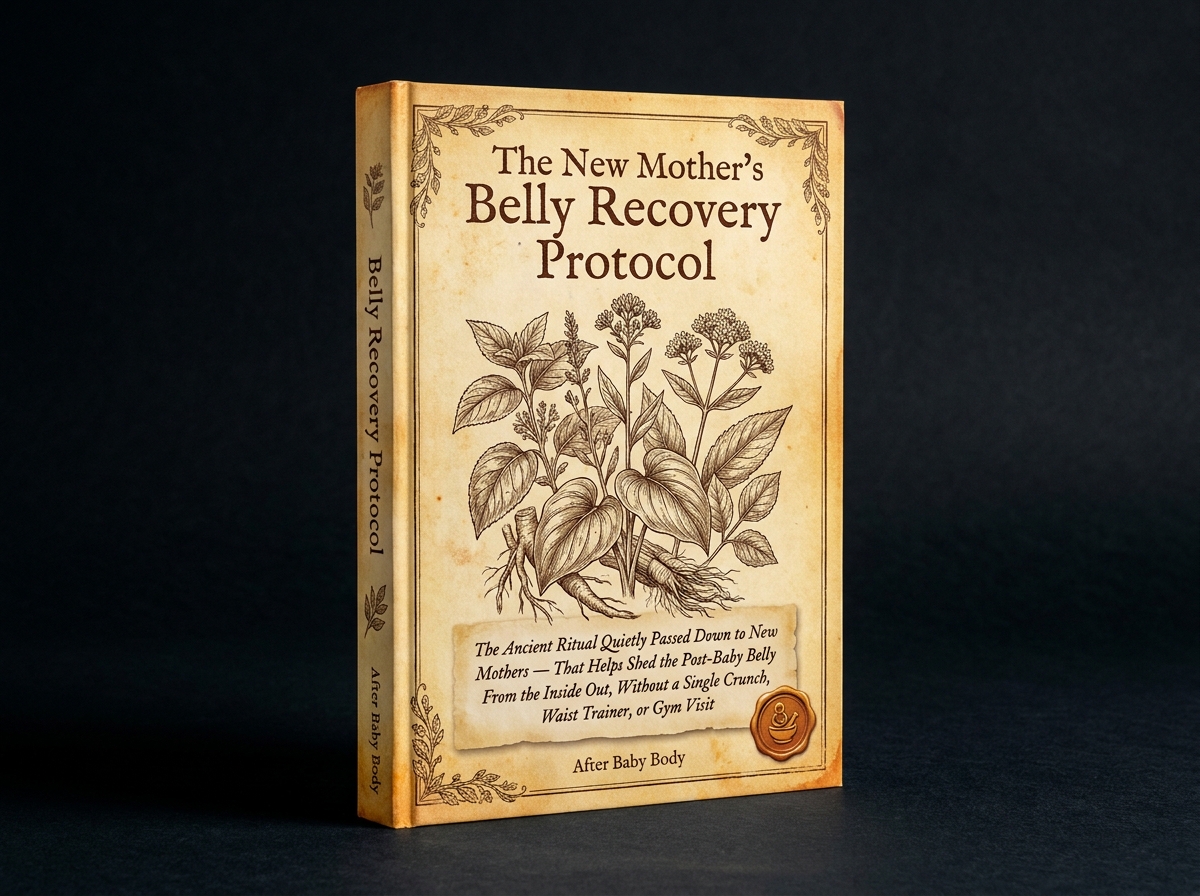
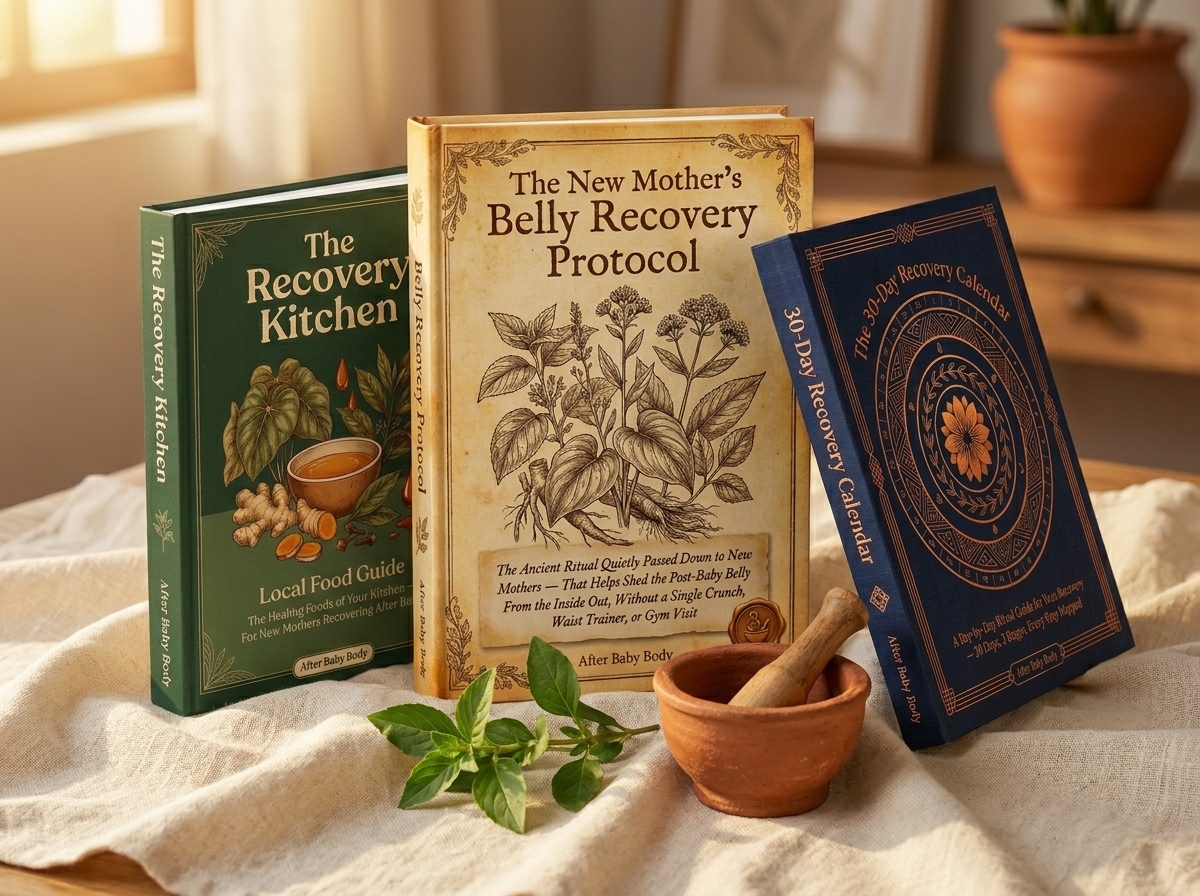
The Ancient Ritual Quietly Passed Down to New Mothers — That Helps Shed the Post-Baby Belly From the Inside Out, Without a Single Situp, Waist Trainer, or Gym Visit
Everything Mama Tola taught me, combined with three years of working with real mothers, inside one clear, step-by-step guide written specifically for the Nigerian mother's body, kitchen, and life.
Inside this guide, you'll discover:
✅ The truth about post-baby belly that most advice gets completely wrong — and why doing the wrong exercises is actively keeping your belly there (Page 4)
✅ The 3-stage recovery framework, laid out week by week, so you always know exactly what to do next and never accidentally skip a step that your body needed (Page 9)
✅ The 5-minute nightly routine — the gentle deep-core sequence you do in your bedroom before sleep. No equipment, no gym, no leaving the house (Page 14)
✅ The diastasis recti self-check — how to test yourself at home to know whether you have abdominal separation, and what that means for which movements are safe for you right now (Page 7)
✅ The Nigerian kitchen recovery food list: which everyday foods accelerate belly recovery, which ones silently work against you, and how to eat properly while breastfeeding without cutting your milk supply (Page 22)
✅ The C-section modification guide — a separate set of adaptations for mothers who delivered by caesarean, with its own timeline and its own doctor-clearance checkpoints (Page 31)
✅ The "why it's not working" troubleshooting guide — the 5 most common reasons progress stalls, and exactly what to adjust for each one (Page 36)
You don't need a gym. You don't need equipment. You don't need to leave your house or your baby.
Everything in this guide can be done in your bedroom, in your kitchen, with your baby in the room.
Compare this to what else is out there:
This guide costs less than one session with a personal trainer.
And it gives you the same protocol those trainers use, written in plain language, adapted for your home, your kitchen, and your life.
How Much Does This Guide Cost?
Let me be honest with you about what went into building this.
- 18 months of sessions with Mama Tola, documenting everything she knew: ₦0 in money, but the kind of time you cannot buy back
- Professional health writer to organise and verify every claim: ₦38,000
- Medical consultation to develop the C-section adaptation guide: ₦45,000
- Testing the protocol with mothers across Lagos and Abuja over three years: ₦60,000+
- Professional design and layout: ₦18,000
- Website setup and delivery system: ₦12,000
Total investment: over ₦173,000.
And that is before the ₦37,000 I wasted personally on things that did not work, and gave me a condition that was getting worse.
A fair price for this guide would be ₦15,000. But I built it to reach every new mother who needs it — not only the ones who can afford to be wrong about the price. So if you take action today:
This price is available ONLY for the first 15 mothers who get the guide today.
After that, it returns to ₦15,000.
Once you click the button above, here's what happens:
- You'll be taken to a simple, secure payment page
- Complete your payment of ₦9,800
- The complete guide and both bonuses are sent to you via WhatsApp and email within minutes
You're not dealing with a bot. It's me, Adaeze. Your access is confirmed the moment your payment clears.
What Mothers Say After Following the Protocol
👇 Swipe to read real conversations →
WAIT — I'm Adding Two Bonuses For The First 15 Mothers Today
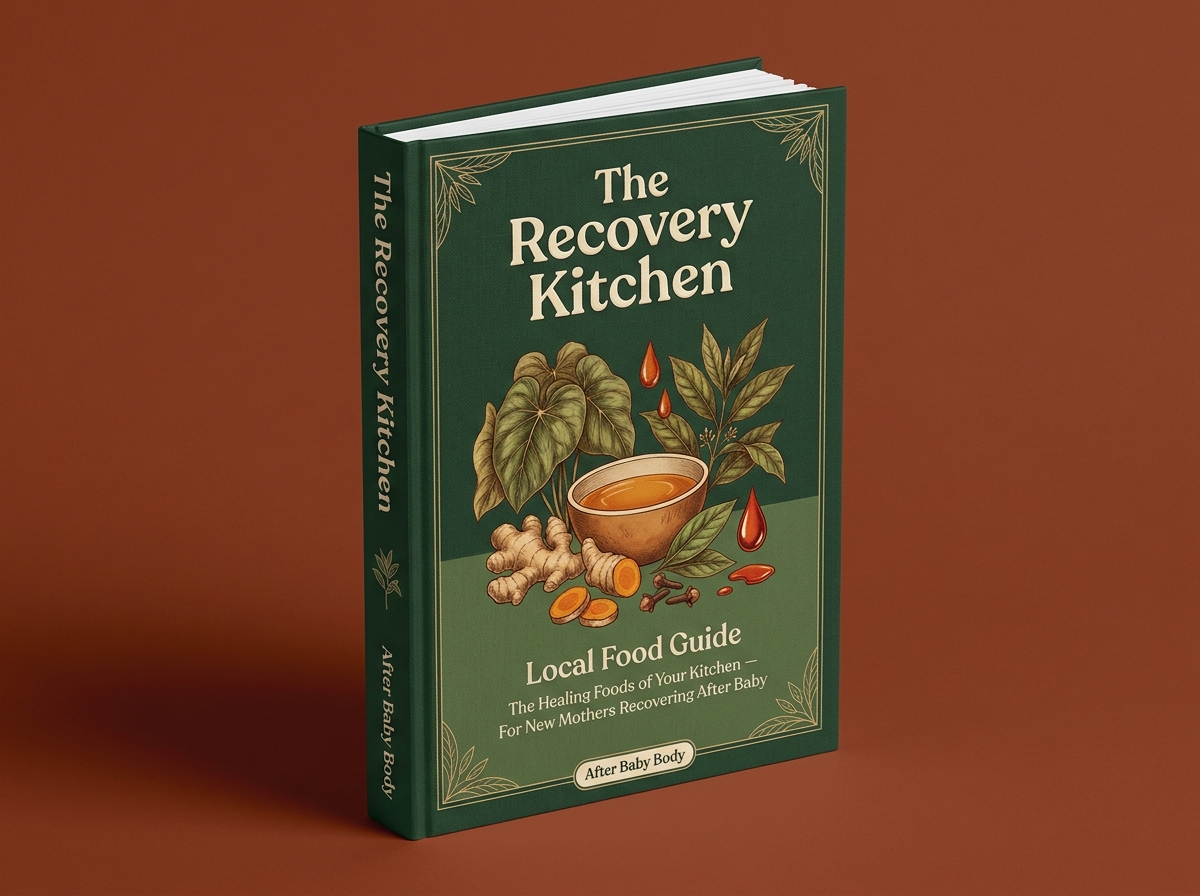
BONUS 1: The Recovery Kitchen
(Value: ₦5,000)
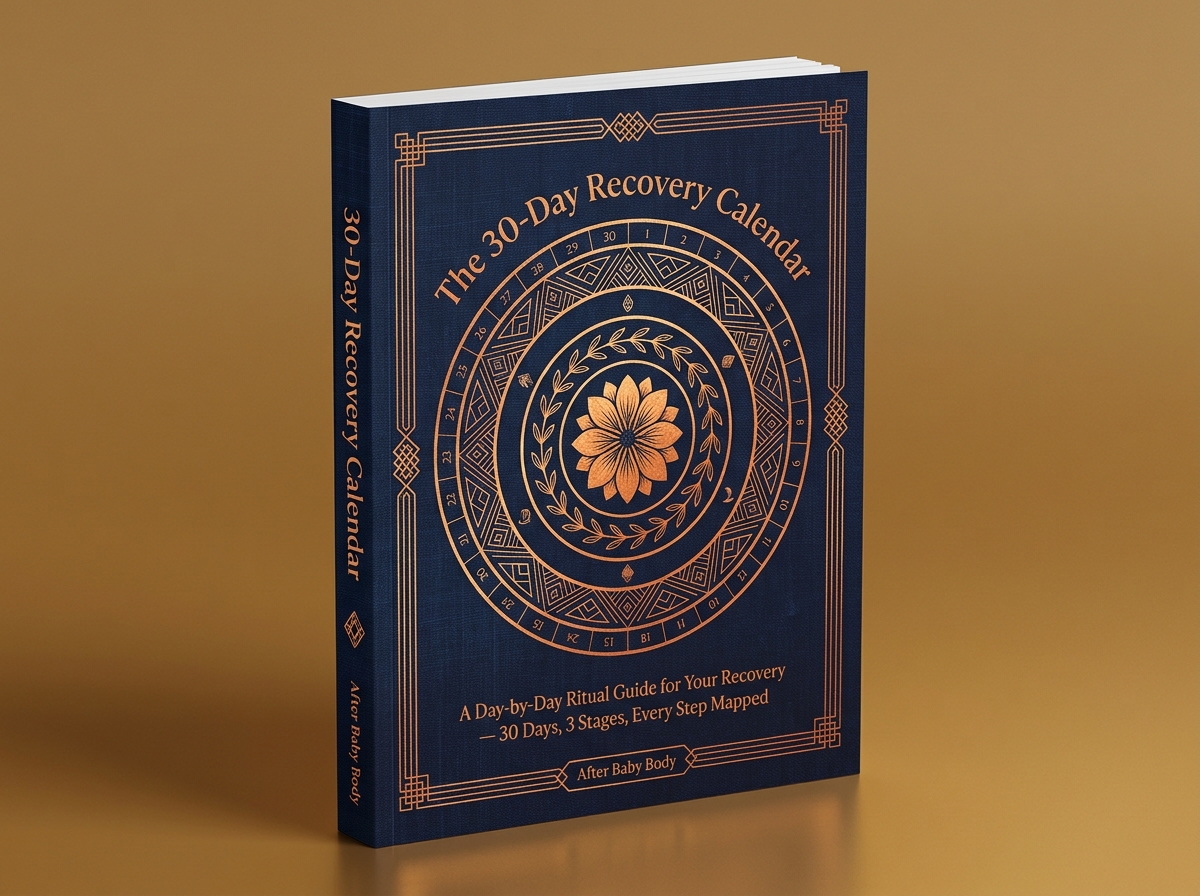
BONUS 2: The 30-Day Recovery Calendar
(Value: ₦5,000)
BONUS 1: The Recovery Kitchen — Local Food Guide (Value: ₦5,000)
A complete food reference guide built specifically for Nigerian postpartum eating, including what to eat to support connective tissue repair, what foods cause belly bloat that mimics belly fat, and how to eat adequately while breastfeeding without cutting your milk supply.
- 14 everyday Nigerian foods that actively support belly recovery
- 8 common foods that work against your progress without you knowing
- A simple 2-week meal guide using ingredients from any local market
- Breastfeeding-safe eating principles so you never have to choose between your body and your baby's nutrition
Worth ₦5,000. Yours free today.
BONUS 2: The 30-Day Belly Recovery Calendar (Value: ₦5,000)
A day-by-day tracker that tells you exactly what to do each day for thirty days — no guessing, no confusion, no decision fatigue. Open it, see today's instruction, do it, tick it off.
- Every day mapped out across all three stages, with the right movement in the right order
- Doctor-clearance checkpoints built in at the key transitions
- Progress tracking built in so you can see your recovery happening in real time
Worth ₦5,000. Yours free today.
The maths:
The New Mother's Belly Recovery Protocol: ₦15,000 ₦9,800
Bonus 1: The Recovery Kitchen: ₦5,000 FREE
Bonus 2: The 30-Day Recovery Calendar: ₦5,000 FREE
Total Value: ₦25,000
Your Price Today: Just ₦9,800
Everything You're Getting Today
Other mothers are reading this page right now. Once the 15 spots are gone, the price returns to ₦15,000 and the bonuses are removed.
My 30-Day Money-Back Promise
Step 1: Get the guide today
Step 2: Mark today's date on your calendar
Step 3: Follow the ritual exactly for 30 days
If you do not see a difference — if nothing in your body has shifted, if the belly has not moved —
send me a WhatsApp message and I will refund every single kobo of your ₦9,800. No drama. No wahala. No questions asked.
You have the method, the bonuses, and a full refund guarantee. The only thing left is the decision.
Right Now, You Have a Choice
Another naming ceremony where you stand in the back of the photo because of how you feel in the dress you're wearing.
Another ₦12,000 on a waist trainer that gives you bruised ribs and does nothing for the muscles underneath.
Another six weeks of YouTube ab workouts that are making the separation worse while you think they are fixing it.
Another morning of that same mirror inventory. Same belly. Same feeling. Same question you are tired of asking.
Another quiet dinner where he is on his phone and you are wondering if this distance between you has a name yet.
Another year passes. The belly is still there. The money is gone. And now so is the belief that anything will actually work.
That is what doing nothing actually costs. Not ₦9,800. Much, much more than that.
Imagine four weeks from now.
You do the diastasis check. The gap has reduced. You can feel the difference before you measure it.
You reach for a skirt that hasn't fit since before the baby. It closes.
Your sister visits and says: "Something is different. What are you doing?"
You feel strong inside a body that feels like yours again. Not someone else's. Yours.
Five minutes a night. Thirty days. That is the distance between where you are and where you want to be.
Questions Mothers Ask Before Getting the Guide
One Last Thing
I want you to imagine something.
Four weeks from now. A Saturday morning.
The baby is still asleep. The house is quiet. You have five minutes to yourself.
You go to the back of your wardrobe and pull out the thing you have not tried since before the baby. The thing you almost gave to your cousin twice because you had told yourself the moment for it had passed.
You put it on.
It fits.
Not perfectly. Not the way it did before the first baby. But it fits. You can breathe. You can move. You are wearing it.
You look at yourself in that mirror — the same mirror you have been avoiding — and the person looking back does not feel like a stranger anymore.
She feels like you.
The relief of that moment. The quiet power of it. The knowing that your body is yours again — not something that is happening to you, but something you came back to.
That moment is waiting for you. It is five minutes a night, thirty days, and one decision away from right now.
Your body is not broken.
It is healing. And it is waiting for the right conditions.
With love,
Adaeze 🌿
P.S. You have a full 30-day money-back guarantee. If you follow the protocol and your body does not respond, you get every naira back. No drama, no wahala, no questions. The only risk on this page is doing nothing.
P.P.S. The ₦9,800 price and both bonuses are only available for the first 15 mothers today. After that, the price goes back to ₦15,000 and the bonuses are gone. Once those spots are filled, I cannot hold the price for you.
P.P.P.S. Every day you wait is another day that mirror says the same thing. You already know the waist trainer is not going to fix it. You already know the tea is not going to fix it. You have known for a while now that something different is needed. The only question left is whether you are going to find out what that is today — or keep waiting for a better time that is not coming.
After Baby Body — Recover Your Body Safely, After Baby
Medical Disclaimer: This guide contains fitness and nutrition information for general educational purposes. It is not a substitute for professional medical advice, diagnosis, or treatment. Always consult your doctor or midwife before beginning any exercise programme after childbirth, especially following a C-section or complicated delivery. Individual results vary. The protocol is designed to complement, not replace, medical care.